
When moving out of a rental, the issue of light bulbs may seem trivial. However, it generates recurring disputes during the exit inspection. The treatment differs depending on whether the bulb is a replaceable consumable or part of a fixed light fixture owned by the landlord. This ambiguity deserves clarification, especially since the type of bulb left in the property can now impact the energy performance of the asset.
Consumable or fixed equipment: the criterion that determines your obligations
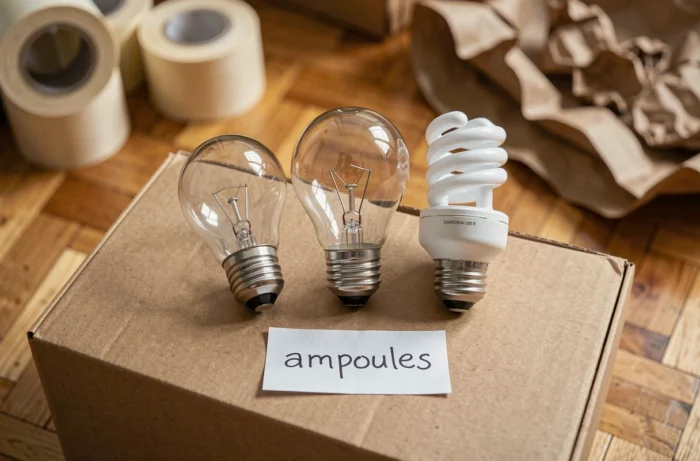
The legal distinction is based on a simple line. Light bulbs and fluorescent tubes located inside the property are classified as consumables at the tenant’s expense. Their replacement during the lease is considered routine maintenance, just like a faucet seal or a smoke detector battery.
Light fixtures fixed to the wall or ceiling (wall sconces, ceiling lights, recessed spots) provided by the landlord are, on the other hand, considered equipment of the property. If one of these fixtures malfunctions (electrical issue, defective socket), the repair is the landlord’s responsibility. The question of whether to leave the bulbs in the rental is therefore largely resolved by this distinction between the container (fixture) and the content (bulb).
| Item | Category | Replacement Responsibility | To Leave Upon Departure? |
|---|---|---|---|
| Screw or bayonet bulb | Consumable | Tenant | Yes, in working condition |
| Fluorescent tube (neon) | Consumable | Tenant | Yes, in working condition |
| Non-replaceable integrated LED spot | Equipment | Landlord | Part of the fixture |
| Ceiling light or wall sconce provided by the landlord | Equipment | Landlord (if malfunctioning) | Do not remove |
| Fixture installed by the tenant | Personal property | Tenant | To take, restore the original fixture |
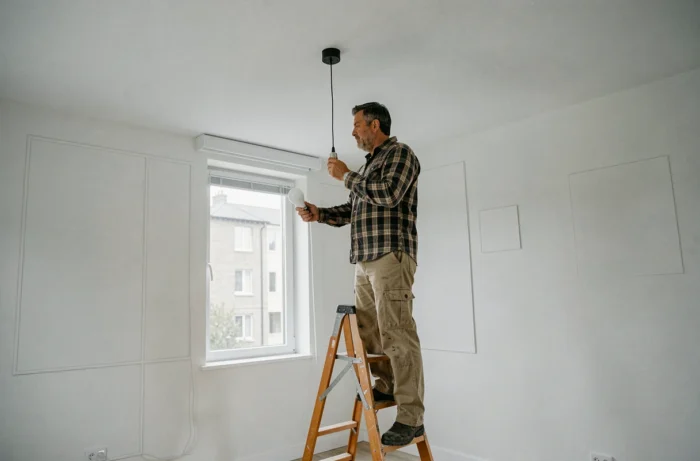
Exit inspection: what is actually checked regarding lighting
The entry inspection serves as a reference. If bulbs were working upon your arrival and are burnt out or missing upon your departure, the discrepancy will be noted. The unit cost of a bulb remains modest, but the accumulation of small defects can justify a deduction from the security deposit.
When the entry inspection does not mention the bulbs (which happens frequently), the situation becomes more delicate. In the absence of mention, the landlord will have difficulty proving that the bulbs were functioning at the start of the lease. Conversely, a tenant returning a property with several non-working light points faces an unpleasant discussion, even without solid written evidence.
What triggers a deduction from the security deposit
- Missing bulbs on fixtures listed as functional in the entry inspection: the landlord can deduct the replacement cost
- Fixtures provided by the landlord removed or replaced with a different model: restoration to original condition is required
- A fixture installed by the tenant still in place while the original fixture is missing: the landlord can charge for the supply and installation of an equivalent fixture
The most effective precaution is to photograph each light point upon entering the premises. This visual proof protects both parties.
LED bulbs and the energy performance of rental housing
Since the Climate and Resilience Law and the reform of the Energy Performance Diagnosis (DPE), the consumption related to lighting is included in the calculation of the energy performance of the property. This data often goes unnoticed in discussions between tenants and landlords.
Leaving high-energy-consuming bulbs (old halogen or incandescent) in a property can negatively impact the DPE, while switching to LED is identified as a sensible action to improve the energy rating. The topic takes on a concrete dimension with the timeline for banning rentals of energy-inefficient properties.
Timeline for rental bans according to the DPE
As of January 1, 2025, properties rated G on the DPE will be banned from rental in mainland France. Properties rated F will no longer be able to be rented starting 2028, and those rated E starting 2034.
For a landlord whose property is on the threshold of a rating, every consumption item counts. Replacing a set of halogen bulbs with LEDs before re-renting the property is no longer just an ecological gesture: it is a measure that can help keep the property within a rental-eligible class.
As an outgoing tenant, leaving functional LEDs rather than energy-consuming bulbs is a gesture that facilitates the transition. You are not legally obliged to do so, but it can weigh positively during the return of the security deposit, especially if the landlord is aware of the DPE issue.
Fixtures installed by the tenant: rules for return
A tenant who has installed a pendant light, chandelier, or track lighting in place of the original fixture must restore the property to its original state. The original fixture must be reinstalled before the exit inspection.
If the original fixture has been lost or discarded, two options are available. Either the tenant purchases an equivalent model and reinstalls it, or negotiates with the landlord to keep the installed fixture. This second option requires a written agreement, even informal, to avoid any future disputes.
Leaving a personal chandelier behind without reinstating the original equipment exposes the tenant to a deduction proportional to the replacement cost. For a basic ceiling light, the amount remains low. For a specific sconce or recessed fixture, the bill can quickly add up.
Checklist before the exit inspection
- Test each light point and replace burnt-out bulbs with compatible models (check E27, E14, GU10 bases according to fixtures)
- Restore the original fixtures if you had installed your own, and keep proof of the restoration
- Compare with the entry inspection: each mentioned fixture must be present and functional
- Clean the lampshades and diffusers provided by the landlord, as yellowing or grease marks may be reported
The cost of a standard set of LED bulbs represents a modest expense compared to the risk of a deduction from a security deposit. Replacing faulty bulbs before the inspection appointment remains the most cost-effective precaution for an outgoing tenant, and the easiest to implement.