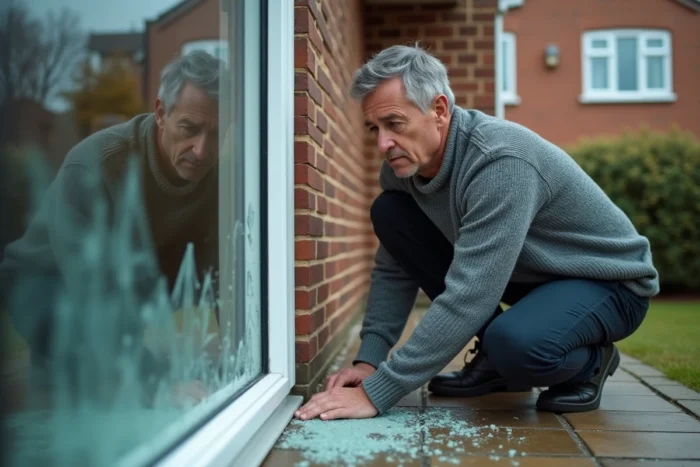
A glass pane that breaks, whether due to thermal shock, an attempted break-in, or a misdirected ball, triggers a series of decisions to be made within a short timeframe. The final cost of the incident depends less on the glazing itself than on the speed of response and the quality of the file submitted to the insurer. Comparing expense items and timelines allows for measuring where the real additional costs lie.
Cost of a broken window: the factors that affect the bill
The price of replacing glazing depends on several variables that, when combined, can triple the cost. The table below isolates the main factors of variation.
| Factor | Impact on cost | Comment |
|---|---|---|
| Type of glazing (single, double, laminated) | High | A double-glazed unit with thermal insulation costs significantly more than a standard single glazing |
| Dimensions and custom sizes | Moderate to high | A large window or a non-standard size window requires specific cutting |
| Emergency intervention (night, weekend) | Frequent surcharge | The rates of a glazier outside of business hours include a travel surcharge |
| Glass breakage insurance deductible | Variable | Some home insurance contracts apply a deductible that remains the responsibility of the insured |
| Time before final intervention | Indirect | A poorly installed temporary closure can lead to secondary damage (infiltration, theft) |
The most underestimated item remains the additional cost related to the delay. Waiting several days without proper temporary protection exposes one to water infiltration or burglary, two situations that increase the claim well beyond the price of the glazing.
Contacting a craftsman for PVC patio door repair as soon as possible allows for a reliable temporary closure to be installed and for an accurate quote to be obtained before any steps are taken with the insurer.
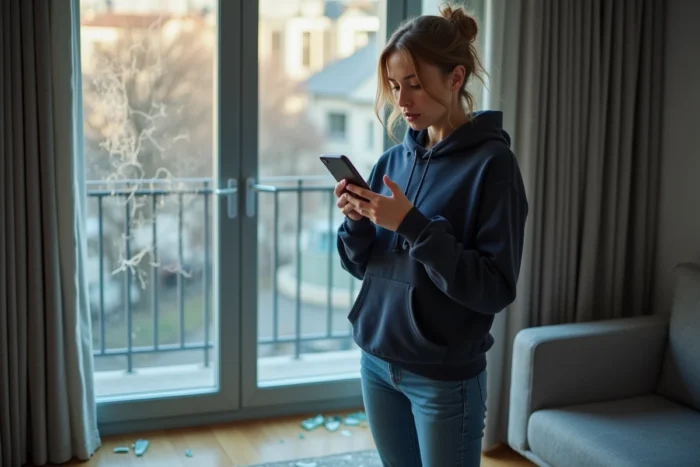
Insurance declaration and timeline: the factor that affects reimbursement
Most home insurance contracts that include glass breakage coverage impose a five business day declaration deadline after the discovery of the incident. For an attempted break-in, this deadline often drops to two business days, with a mandatory police report.
Exceeding these deadlines can lead to a reduction in compensation or even a refusal of coverage if the insurer demonstrates a prejudice related to the delay. This time dimension is rarely highlighted in emergency guides, although it directly conditions the level of reimbursement.
Documenting the incident before cleaning
Several insurers now recommend photographing the broken glass from different angles before any cleaning or installation of temporary protection. Erasing evidence too quickly (completely sweeping up shards, immediate replacement without visual assessment) can complicate the processing of the file.
The elements to gather before contacting the insurer:
- Photos of the damaged glass, from the inside and outside, with a visible size reference (meter, hand)
- Photos of the immediate environment (signs of break-in on the frame, debris on the ground, object that caused the impact)
- Invoice or quote from the glazier mentioning the type of glazing, dimensions, and cost of the intervention
- Copy of the police report if the cause is an act of vandalism or an attempted burglary
A complete file speeds up processing and reduces the risk of disputes over the reimbursed amount.
Thermal shock and spontaneous breakage: an unknown scenario
Not all broken windows result from physical impact. Thermal breakage occurs when a significant temperature difference develops between two areas of the same glazing, for example, one part exposed to direct sunlight and another shaded by a blind or a piece of furniture pressed against the window.
This phenomenon affects more low-emissivity double glazing, whose inner face absorbs more heat than standard glazing. The crack usually appears perpendicular to the edge of the glass, without a visible impact point.
Preventing thermal breakage on reinforced insulation windows
Some precautions can limit this risk on high thermal performance glazing:
- Do not apply tinted or reflective film to double glazing without checking compatibility with the manufacturer
- Avoid placing a dark piece of furniture directly against a south or west-facing patio door
- Maintain minimal ventilation between the interior blind and the glazing to reduce the thermal gap
In the event of thermal breakage, the glass breakage coverage of home insurance generally covers the replacement. The difficulty lies in the proof: the absence of a visible impact point distinguishes thermal breakage from accidental shock, and the glazier can confirm this by examining the crack pattern.
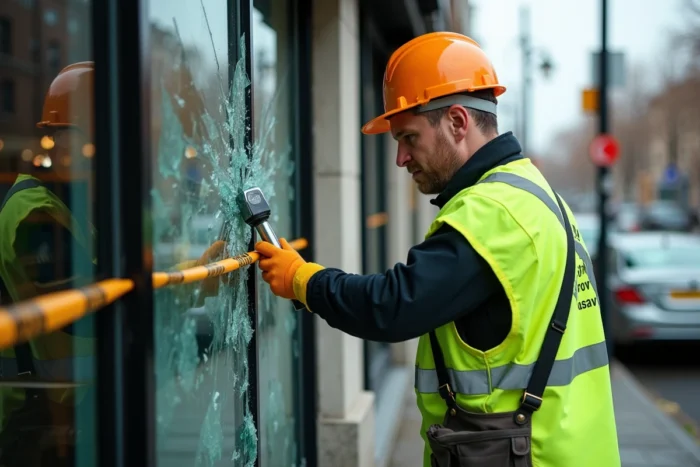
Temporary closure of a broken window: security and temporary insulation
Between the moment of breakage and the glazier’s final intervention, the window remains a point of vulnerability. The temporary closure serves two functions: to prevent intrusion and to limit thermal losses.
A plywood panel screwed onto the frame offers better resistance than a simple stapled plastic film. For PVC or aluminum windows, the glazier can install a temporary glazing held in place by temporary beads, a solution that is more watertight than a makeshift covering.
The quality of this temporary closure has a direct impact on the final bill. Insufficient protection that allows rain to enter for two days can cause damage to the flooring or furniture located under the window, damages that are not always covered by the same warranty as the glass breakage.
The final replacement requires precise measurements of the frame, ordering the correct type of glazing (thickness, composition, thermal insulation coefficient), and checking the condition of the seals. A detailed quote, submitted to the insurer before the work, remains the most reliable way to control the remaining costs after the deductible.