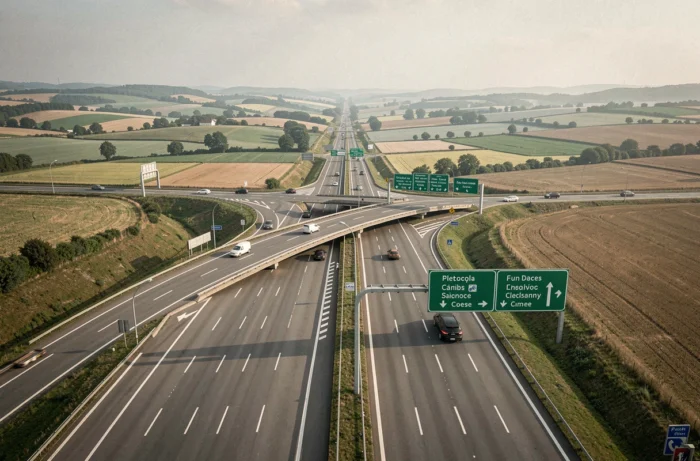
The French motorway network is based on a concession system where each toll section is operated by a private company. This fragmented organization explains why rates, payment methods, and even signage vary from one route to another. Before hitting the road, understanding the structure of this network allows drivers to anticipate costs and avoid unpleasant surprises, especially with the arrival of free-flow tolling.
Free-flow tolling: a system that changes trip preparation
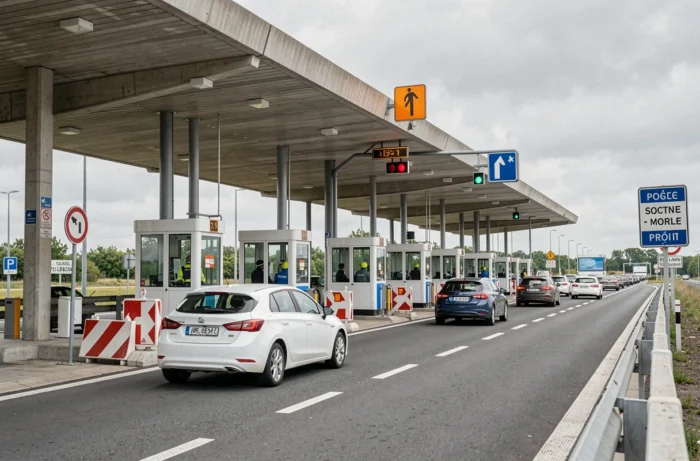
The free-flow tolling eliminates physical barriers. Gantries equipped with cameras and sensors read license plates or toll badges as vehicles pass through, without slowing down. Drivers no longer stop but must pay afterward if they do not have a badge.
The A79 already operates under this principle. The A13-A14 switched to free-flow at the end of 2024, and new sections like the A69 are expected in 2026. This gradual expansion significantly changes how to prepare for a trip: it’s no longer enough to carry change or a credit card.
The adjustment period is set at 72 hours after passage. Field reports indicate a possible delay between passing the gantry and the trip appearing in the online payment system. This delay reduces the actual margin available to the driver, creating a risk of unintentional non-payment even in good faith.
Penalties related to late payments represent significant amounts. Sanef collected 25 million euros in 2025 from its Paris-Normandy network alone due to late fees. The issue is no longer just technical: it has become budgetary and litigious for thousands of drivers.
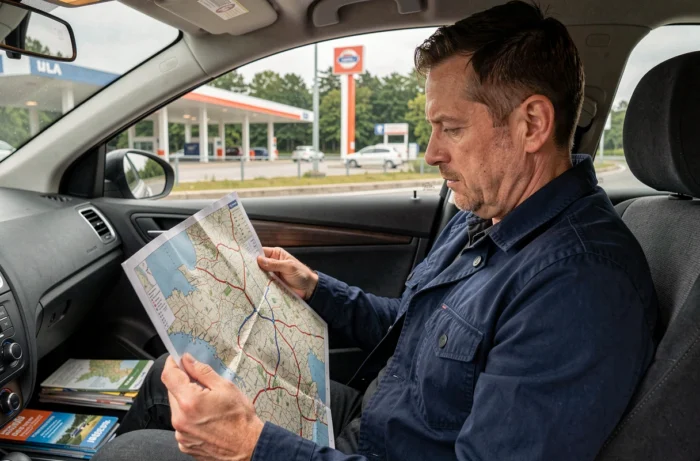
Consulting a map of motorways and tolls in France before departure helps identify free-flow sections along the planned route and anticipate the payment method.
Vehicle classes and toll rate calculation
The toll price does not depend solely on the distance traveled. The vehicle classification directly determines the applicable rate. Concession companies use a common system with five classes, based on the height at the front axle and the number of axles.
- Class 1: light vehicles under 2 meters in height and under 3.5 tons (cars, small vans)
- Class 2: vehicles or towed combinations measuring between 2 and 3 meters in height, or light vehicles towing a trailer
- Class 3: two-axle vehicles exceeding 3 meters in height (trucks, buses)
- Class 4: three-axle or more vehicles exceeding 3 meters in height (heavy goods vehicles, semi-trailers)
- Class 5: motorcycles and two-wheeled vehicles, generally benefiting from a reduced rate compared to class 1
A motorhome can switch to class 2 or 3 depending on its height. A light vehicle towing a caravan automatically moves to class 2. These reclassifications often surprise occasional drivers who discover a doubled amount at the time of payment.
Each concessionaire (ASF, Cofiroute, ESCOTA, APRR, Sanef, ATMB) publishes its own pricing schedules. Rates vary from one network to another for the same distance, as they depend on the concession contract and the topography (tunnels, structures).
SMS scams and fake payment notices related to tolls
The expansion of free-flow tolling has given rise to a parallel problem: SMS scams and fake payment notices. Fraudulent messages imitating Sanef or other concessionaires invite drivers to pay a supposed outstanding amount via a malicious link.
The mechanism exploits the legitimate concerns of drivers who know they have passed through a toll without a barrier and fear they have forgotten to settle up. The fake SMS replicates the concessionaire’s graphic charter and mentions a credible amount, often accompanied by a threat of increased charges.
To distinguish a genuine reminder from a fraud attempt:
- Concessionaires never send payment requests via SMS containing a direct payment link
- The official regularization site is always accessible from the concessionaire’s portal (Sanef, APRR, Vinci Autoroutes), never from a shortened link
- In case of doubt, check your account on the official concessionaire’s website or contact customer service before clicking
Never click on a payment link received via SMS remains the basic rule. Concessionaires prefer postal mail and the online customer area for regularizations.
Free motorway sections in France: routes to know
Not all motorway routes are toll roads. Several free motorways cross the territory, often funded directly by the state or local authorities rather than by a private concession.
The A75, which connects Clermont-Ferrand to Béziers, is the most well-known example. It allows travel south without tolls, except for the Millau Viaduct, which remains toll-based. Other routes like the A20 between Vierzon and Montauban offer a free alternative to parallel toll motorways.
Incorporating these free sections into trip planning can significantly reduce the budget, especially for long summer journeys south. The financial gain sometimes comes at the cost of a slightly longer travel time, as these routes pass through more reduced-speed areas or two-lane sections.
The map of the French motorway network clearly shows this coexistence between toll routes and free access routes. Identifying free sections before departure remains the most reliable way to balance budget and travel time, without discovering amounts at the toll booths.