One Sunday afternoon, three generations gathered in the living room, and no one could agree on what to do. The children want to move, the teenagers are dragging their feet, and the grandparents prefer to stay seated. Finding an original activity that works for everyone is not about inspiration, but rather a simple method: filter by constraints before choosing by desire.
Choosing an original activity suitable for a mixed group
Most idea lists mix children, friends, and family without asking the basic question: who is participating, and under what conditions? A group of four athletic adults and a family group with a four-year-old do not have the same options.
Before looking for the most spectacular activity, save time by applying three concrete filters:
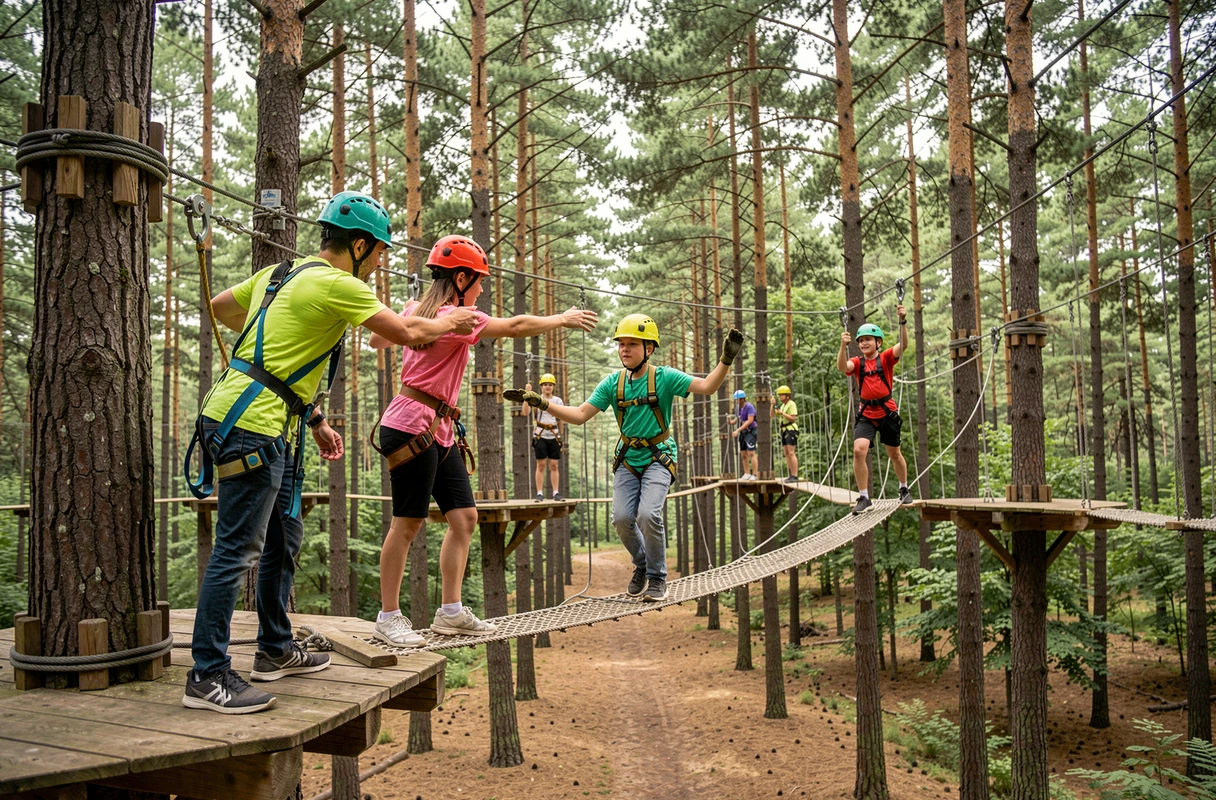
- The age and mobility gap within the group, which determines the acceptable physical level. An obstacle course with a zip line often excludes those under six and people with reduced mobility.
- The budget per person and the available duration. An escape room outing costs more than a photo challenge in the neighborhood and takes less time than a hike.
- The backup plan in case of bad weather or cancellations. Flexible activities (quizzes, giant games, creative workshops) handle surprises better than a rigid reservation.
You can explore the activities to discover on Tout Mon Monde to find formats that check these three boxes without limiting yourself to a specific city or budget.
Micro-adventures with family: experiences of less than an hour
Classic guides suggest full-day outings. In practice, short formats of less than an hour work better with children. Attention wanes quickly, especially among little ones, and parents know this.
The principle of the micro-adventure is to transform an ordinary place into a playground. A park, a shopping street, a garden are sufficient.
The outdoor photo challenge
Distribute a list of ten items to photograph (a red door, an animal, a funny sign, a strange shadow). Each participant or team has a phone and a limited time. No equipment, no reservation, and the results make everyone laugh during the debrief.
The curiosity safari
A calmer variant, suitable for groups with young children: go for a walk with a small notebook and note or draw everything that is out of the ordinary. A mushroom on a trunk, a street sign with a strange name, an architectural detail. Observation replaces competition, which is better suited for intergenerational groups.
These formats require no registration or expense. They can be started in five minutes and stopped when the group gets tired.
Games without equipment for evenings with friends or family
Board game evenings assume you have the right box, enough players, and rules that everyone agrees to learn. Games without equipment bypass these three obstacles.
Charades, riddles, and memory games adapt to all ages without preparation. You can play them around a table, in a car, while waiting for a dish at a restaurant.
Three formats that work
The blind test works particularly well among friends and family because each generation recognizes different songs. A phone and a speaker are enough.
The home quiz takes the idea further: each participant prepares a few questions on their favorite topic (sports, movies, animals, cooking). Mixed teams are formed to balance knowledge. Feedback varies on this point, but mixing generations in each team often leads to better moments than opposing them.
The guessing game (one person thinks of someone, the others ask closed questions) remains a classic because it requires nothing and works just as well with four as with fifteen players.
Creative workshops and home experiences
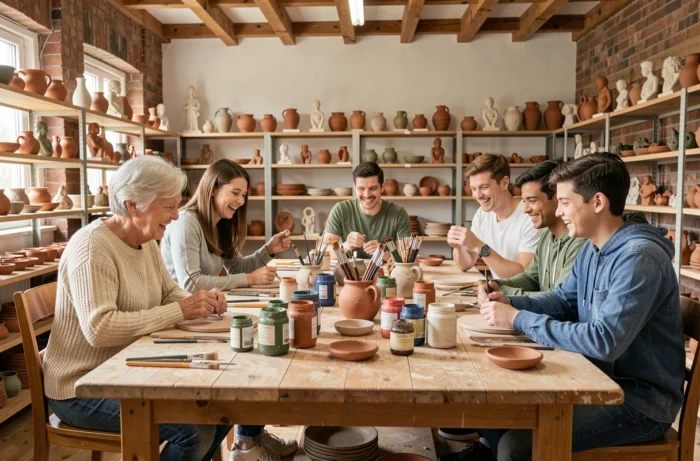
Creative workshops have the advantage of producing something tangible. When you leave with an object, a drawing, or a cooked dish, the activity leaves a mark, which strengthens the shared memory.
For families, cooking workshops remain the most inclusive format. A five-year-old can mix dough while a teenager decorates and an adult manages the oven. Everyone participates at their level without the need to simplify the whole.
DIY workshops (decoration, pottery, candle making) can also be done at home with basic materials. Detailed tutorials can be found online, and the investment is limited to a few supplies. The result matters less than the time spent together, but having a finished object provides a satisfaction that games do not offer.
For groups of friends, fun science experiments (baking soda volcanoes, slime, water rockets) surprisingly work well with adults. The playful aspect creates a relaxed atmosphere that “serious” activities struggle to establish.
Original outings without breaking the bank: escape rooms, parks, and museums differently
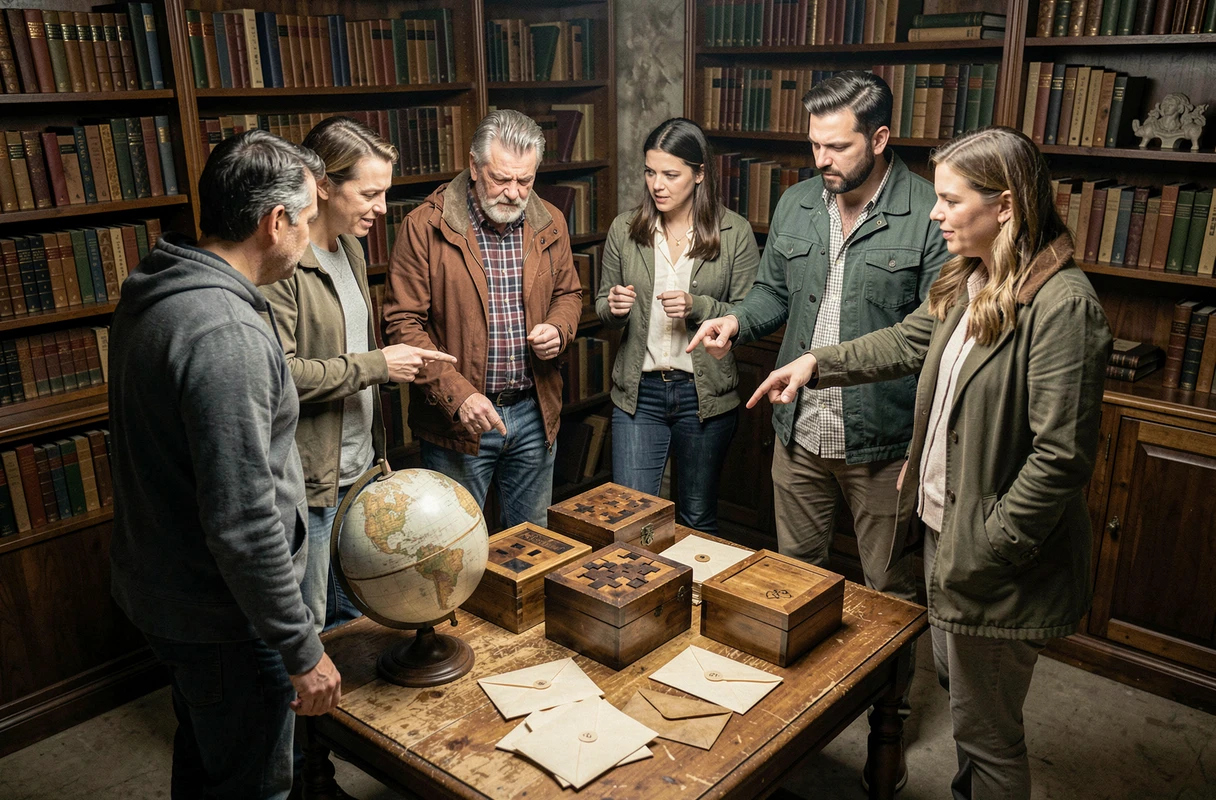
Escape rooms remain a safe bet for groups of friends and families with teenagers. The format requires cooperation, sets a clear duration, and does not require any physical skills. Some rooms offer scenarios suitable for children as young as seven or eight years old.
Science museums and adventure parks offer immersive experiences that have evolved significantly in recent years. Choosing weekday slots reduces waiting times and budget, as several venues offer discounted rates outside the weekend.
For low-cost outings, urban rallies (puzzle courses in a city, with a phone) combine walking, culture, and play. Several free or low-cost apps offer routes in major cities in France, from Paris to Lyon, including Bordeaux and Nantes.
The most original activity is not necessarily the most expensive or the most exotic. It is the one where each participant finds their place, where no one is left waiting on the bench, and where people are still talking about it three weeks later. Filtering by practical constraints before being tempted by originality is the most reliable method for ensuring the moment truly works.