Original decoration is not just about accumulating trendy objects. It relies on technical choices of materials, proportions, and light that structure the atmosphere of an interior far more than any decorative accessory. Here, we offer concrete ideas to transform a space with coherence, taking into account a rapidly changing furniture market.
Material Relationships and Tactile Contrasts in Interior Decoration
The choice of materials conditions the perception of a room even before the color of the walls. An interior gains depth when smooth surfaces (lacquer, glass, polished metal) are contrasted with raw textures (crumpled linen, brushed wood, natural stone). This principle of tactile contrast is underutilized in most mainstream decor guides, which focus on color palettes.
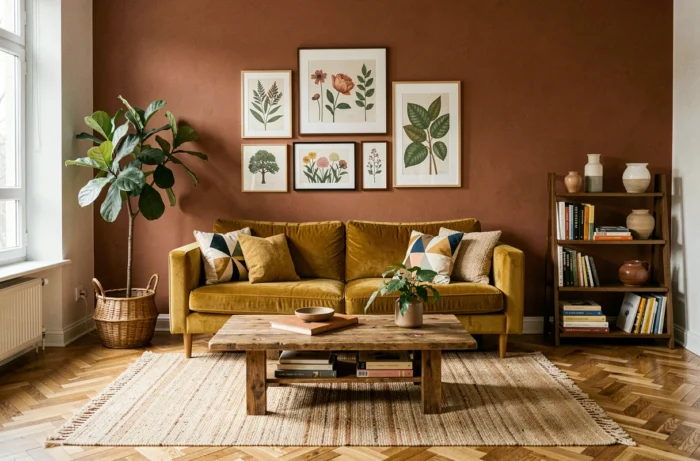
We recommend working with pairs of materials in each functional area. A solid oak table top combined with powder-coated steel legs creates a visual tension that makes the piece stand alone, without the need to overload it with objects. A corduroy sofa placed on a polished concrete floor produces the same effect of dialogue between softness and minerality.
To source these pieces, the second-hand market now represents a fully-fledged channel: according to a Xerfi report from 2026, about one in four pieces of furniture sold in France is second-hand. Thrifting is no longer just an aesthetic stance; it is a structural reflex that allows access to noble materials (walnut, brass, artisanal ceramics) at significantly lower prices than new. A wide selection of decorative pieces and furniture can be found on https://www.bazaaretcompagnie.com/, which brings together objects with varied finishes.
Layered Lighting: The Technique That Changes the Atmosphere of a Living Room
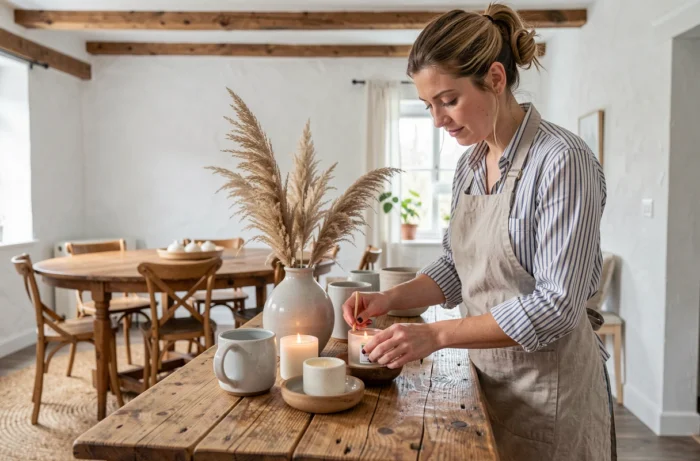
A central ceiling light is the surest way to make a living room feel flat. Lighting should be thought of in three overlapping layers: ambient light (dimmer pendant or ceiling light), functional light (reading lamp, worktop spotlights), and accent lighting (wall sconces, LED strips behind furniture).
The color temperature is just as important as the intensity. For a living space, staying between 2,700 K and 3,000 K ensures a warm atmosphere without yellowing wall tones. Beyond 4,000 K, the lighting becomes clinical and devalues warm materials like wood or leather.
A dimmer on each lighting circuit transforms a single room into multiple atmospheres depending on the time of day. This is a modest investment that offers greater decorative flexibility than any furniture change.
- Layer 1 (ambient): natural fiber pendant or opal diffuser ceiling light, adjustable intensity, placed centrally or slightly offset towards the conversation area.
- Layer 2 (functional): articulated floor lamp or reading light near the sofa, adjustable spotlights in the kitchen, always in a minimum of 2,700 K.
- Layer 3 (accent): directional sconces to highlight a painting, LED strip recessed under a shelf or behind a headboard.
Colors and Proportions: Calibrating an Accent Wall Without Disrupting the Room
Painting an accent wall is a common idea, but the execution often misses the mark. The chosen wall should be the one visible upon entering the room, not the one with the main window. An accent wall backlit loses all its saturation and appears duller than expected.
The proportion between painted surface and neutral surface determines the perceived balance. We observe that a ratio of about one-fifth of colored surface (one wall out of four or five) works in most configurations. Beyond that, the color saturates the space instead of structuring it.
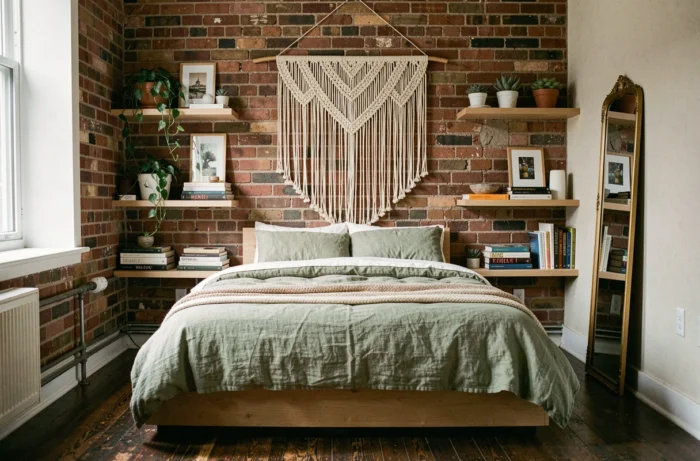
The choice of hue depends on the orientation of the room. A north-facing exposure supports warm tones (terracotta, ochre, rust) that compensate for the cold natural light. Conversely, a south-facing living room gains depth with cool tones (sage green, slate blue) that absorb excess brightness without darkening.
Matte or Satin Finish Depending on Use
The finish influences as much as the color. A deep matte absorbs light and masks imperfections in the substrate, which is suitable for old walls. The satin finish reflects light sources and amplifies the sense of space, but reveals every flaw in the plaster. In a kitchen or bathroom, satin is preferable for its moisture resistance and ease of maintenance.
Original Decoration with Second-Hand: Going Beyond Simple Vintage Effect
The ongoing decline in new furniture sales (several consecutive years of decline according to France Inter data from September 2026) is pushing buyers towards alternative channels. Second-hand is no longer limited to Sunday flea markets. It now permeates the design market with signed pieces resold online, lots of industrial lighting, and Scandinavian furniture from the 1960s.
The challenge for successful decoration is not to collect finds but to integrate them into a coherent whole. A vintage boucle fabric armchair works in a contemporary living room as long as the existing palette is respected. Mixing eras requires a unity of tones or materials, never both at the same time.
- Restore rather than leave as is: reupholstering a seat, stripping a wooden base, or replacing a lampshade is enough to place an old piece in a current decor.
- Limit “statement” pieces to one or two per room: an Art Deco sideboard or an oversized pendant is sufficient on its own. Multiplying them creates a museum effect.
- Check structural integrity before purchase: the mortise-and-tenon joints of a 1950s piece often surpass those of a new particle board piece, but the glues may have aged.
Transforming an interior with style relies less on budget than on the rigor of associations: contrasting materials, layered lighting, colors calibrated according to orientation. The second-hand market today offers a reservoir of quality pieces that, when well selected, bring a personality that no standardized catalog can replicate.