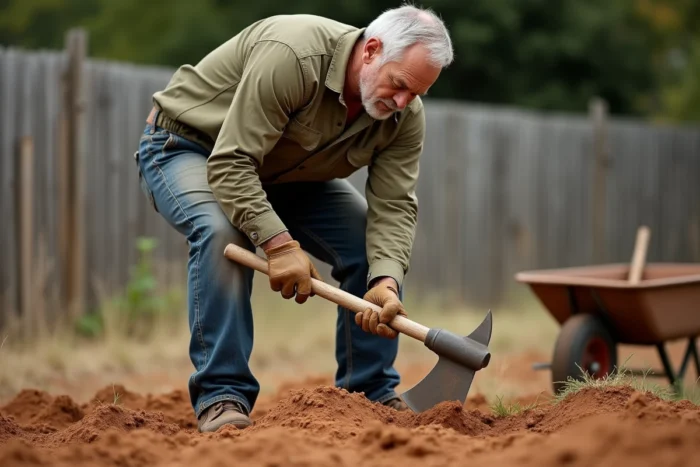
Digging in very hard soil is often more about approach than it is about strength. The soil offers variable resistance depending on its moisture content, composition (clay, silt, stones), and the depth of the compacted layer. Adjusting the timing of intervention and the type of tool to these parameters radically changes the effort required.
Soil Working Window: Digging at the Right Time in Hard Soil
Most content on the subject focuses on tool selection. They overlook a crucial factor: the timing of digging determines the difficulty of the work. Clay soil worked in the middle of summer, dry and compact like concrete, resists both the spade and the pick. The same soil, a few days after rain, cracks under a simple fork.
The technical term is “reclaimed soil”: moisture persists at depth, but the surface has dried. Tools (spade, broadfork, fork) can then crack the soil instead of bouncing off compact blocks. At the end of winter, frost often crumbles the clay layers, opening another favorable window for digging without exhausting oneself.
When exploring methods for very hard soil, this parameter consistently comes up: working on reclaimed soil drastically reduces the difficulty. Planning your planting or light earthworks based on the weather of the previous days avoids hours of unnecessary struggle.
Diagnosing Compaction Before Choosing a Gardening Tool
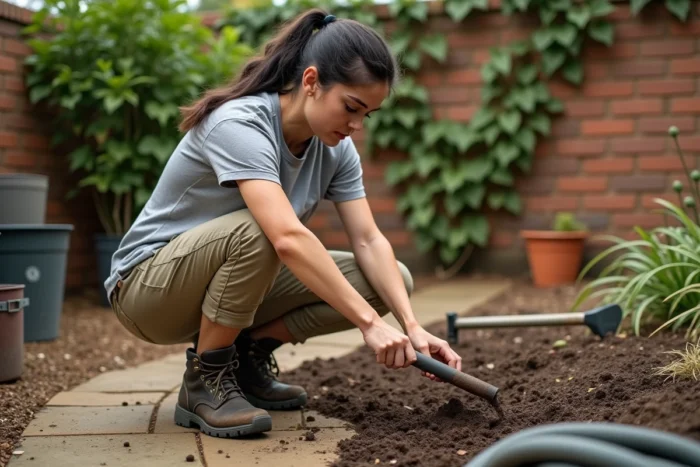
Not all hard soils are hard for the same reasons. Before pulling out the pickaxe, it’s essential to understand where the resistance comes from. The distinction is made between three common situations.
- A surface crust, often caused by the drying of silty or clayey soil after heavy rains. It breaks with a simple cultivator or a digging fork, without particular effort.
- A plow pan, a compacted layer located at the usual digging depth (around the length of a spade blade). It results from the repeated passage of tools at the same level. The broadfork or digging fork can crack it if it remains superficial.
- A naturally compact deep horizon, typical of heavy clay soils. In this case, manual tools reach their limits, and mechanized cracking (mini-excavator, subsoiler) becomes relevant for significant work.
A widely circulated practical recommendation in agricultural circles for several years states that one should intervene only a few centimeters below the compacted layer, without going deeper, to avoid mixing soil horizons. This principle also applies to gardening: digging too deep in hard soil is pointless if the compaction only concerns the top few centimeters.
Broadfork, Digging Fork, and Pickaxe: Which Tool for Which Hard Soil
The choice of tool directly depends on the diagnosis made. The classic steel spade, often the first reflex, is not always the best option on very hard soil.
Broadfork for Surface-Compacted Soils
The broadfork works by leverage: its tines penetrate the soil, and then the rocking motion cracks the earth without turning it over. On clay soil where compaction remains in the top few centimeters, the broadfork decompacts without destroying the biological structure of the soil. It requires less effort than a classic spade because it utilizes body weight and leverage, not arm strength.
However, on stony soil or with deep compaction, its tines hit and bend. It is not designed to break blocks.
Digging Fork for Heavy Soils
The digging fork (four steel tines) penetrates better than a flat spade in clayey soils. The tines push the soil apart instead of cutting it, which requires less force on compact soil. For vegetable garden or planting work, it is often the most versatile tool in hard soil.
Pickaxe and Digging Bar for Extreme Cases
When the soil resists the fork, the garden pickaxe comes into play. Its weight and pointed shape concentrate energy on a small surface, allowing it to break dry clay blocks or penetrate stony layers. The digging bar remains the last resort for deep holes in rocky or extremely compact soil: it works by vertical percussion and fragments what the pickaxe cannot reach.
Preparing the Soil Before Digging: Watering and Covering
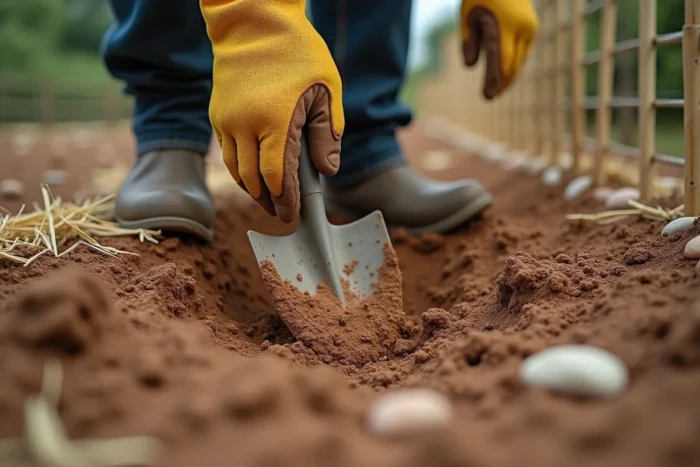
On truly hard soil, attacking directly with a tool is not always the most effective strategy. Preparation beforehand can transform the work.
Watering the targeted area thoroughly one or two days before digging allows the water to seep in and soften the surface layers. The goal is not to saturate the soil (which would make it sticky and difficult to work), but to achieve that favorable reclaimed state. On a limited surface, slow and prolonged watering yields better results than a powerful spray that runs off without penetrating.
Another approach, slower but effective in the long term, involves covering the area with thick mulch or an opaque tarp several weeks before the work. Mulching retains moisture and stimulates biological activity, which naturally decompacts the top few centimeters. Earthworms and microorganisms do part of the work for you.
These two combined techniques, prior watering and soil covering, reduce the mechanical resistance of the soil even before touching a tool. On garden or vegetable garden clay soil, this preparation can make the difference between an hour of strenuous work and half an hour of moderate effort.
The choice between these approaches depends on the timing: if you need to dig tomorrow, watering is the only quick option. If you are planning a planting for spring, covering the soil as early as autumn remains the most energy-efficient method, for both the gardener and the soil.