In France, health regulations strictly govern the presence of animals in places where food is prepared and consumed. For dog owners, the question arises with every outing: can you bring your dog to Burger King without risking refusal at the entrance? The answer depends on several factors, from national legal frameworks to decisions made locally by each restaurant manager.
What French health law actually imposes on fast-foods
Regulation (EC) No. 852/2004, transposed into French law, prohibits the presence of domestic animals in food preparation and service areas. This rule applies to all restaurants, including Burger King.
However, the law does not specify anything about outdoor terraces. This legal void creates a gray area that each operator interprets in their own way. One manager may allow a dog on the terrace without violating regulations, while another may refuse any animal on their premises.
The legal exception concerns guide dogs and assistance dogs. Their access is guaranteed by law in all establishments open to the public, including indoor areas of restaurants. A refusal constitutes punishable discrimination. The question of whether Burger King accepts dogs thus has a clear answer for these service animals: yes, unconditionally.
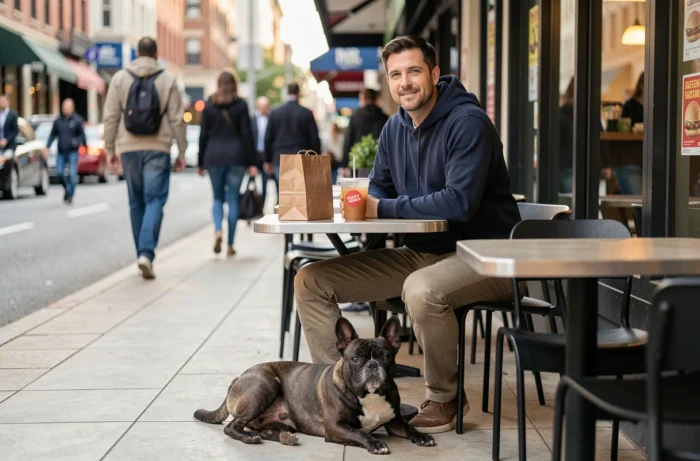
Burger King terrace and dogs: tolerance varies from restaurant to restaurant
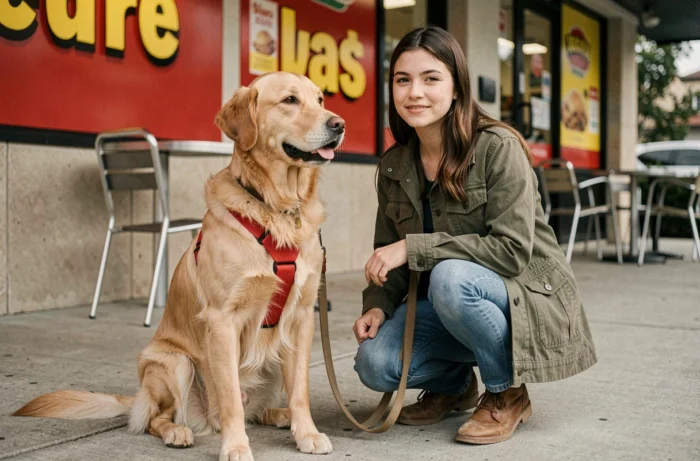
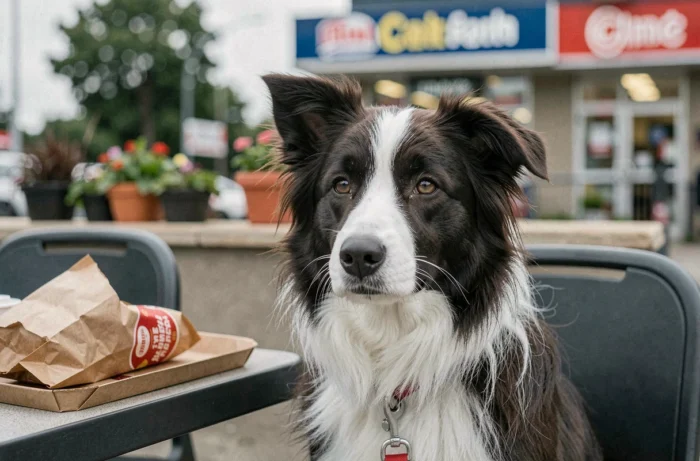
Field reports vary significantly between establishments. Some Burger King restaurants have open terraces where staff easily accept a leashed dog, provided it remains calm and does not approach other customers.
Other franchisees enforce a strict total prohibition, including on the terrace. No national directive from the Burger King France brand publicly resolves this point. The decision rests with the manager of each restaurant, who relies on health regulations and their own assessment of risk.
Several factors influence this local tolerance:
- The configuration of the terrace (open to the street or semi-enclosed, adjacent to the dining area or separate) alters the manager’s perception of health risk.
- The size of the dog plays a role: testimonials show that dogs under ten kilos are more easily accepted than larger breeds.
- The current crowd level can sway the decision: during peak times, a normally tolerant manager may refuse an animal to avoid friction with other customers.
Calling the restaurant before going is the most reliable way to avoid an unnecessary trip. A simple phone call allows you to know the manager’s position without any unpleasant surprises on-site.
Drive-thru and takeout: concrete alternatives with your dog
The drive-thru is the simplest solution for dog owners. The dog stays in the vehicle, no access issues arise, and the order proceeds without constraints. However, in hot weather, care must be taken not to leave the animal alone in a parked car, even for a few minutes.
Ordering takeout via the app or at the counter offers another option. One of the two companions can enter to place the order while the other stays outside with the dog. This arrangement also works for solo individuals: order from the app, then pick up the bag at the counter in a few seconds.
These two options completely bypass the question of access to the restaurant and accommodate all sizes of dogs, including categorized breeds whose access to public places is subject to additional requirements (muzzle, short leash).
Dog-friendly brands in France: Burger King facing market practices
The trend in European dining is moving towards greater acceptance of pets. In Germany, Austria, or Italy, the presence of dogs in restaurant dining areas does not pose hygiene issues in the eyes of local authorities. In France, the situation remains more restrictive, but several brands display a more open policy than fast-foods.
Some independent cafes, brasseries, and even fast-food chains are beginning to claim “dog-friendly” status, with water bowls on terraces and clear signage at the entrance. Platforms like EmmeneTonChien.com list establishments that accept dogs, restaurant by restaurant, with details on the maximum size tolerated and the conditions of welcome.
Internationally, more structured frameworks are emerging. Hong Kong introduced a specific licensing regime in 2026 for restaurants wishing to welcome dogs. The conditions are strict:
- Mandatory large-format signage at the entrance indicating that dogs are allowed.
- Prohibition on cooking dog food on-site, with a requirement to use disposable utensils dedicated to animals.
- Immediate cleaning protocol in case of defecation and obligation to report any bite incident to authorities within two days.
This type of regulatory framework far exceeds the simple informal tolerance observed on the terraces of some French Burger Kings. It shows that a structured welcome for dogs in dining establishments is possible but requires investments and procedures that most fast-food franchisees are not yet ready to undertake.
Tips for entering a Burger King with your dog without incident
If the restaurant you are targeting tolerates dogs on the terrace, a few precautions can reduce the risk of problems. A dog on a short leash, lying under the table, often goes unnoticed. Bring a collapsible bowl and water, especially in summer.
Avoid peak lunch and dinner hours. A less crowded restaurant will be more inclined to tolerate an animal than a packed dining area. If an employee asks you to leave, do not insist: the manager is within their rights for the dining area and has discretion for the terrace.
For category 1 or 2 dogs, wearing a muzzle is mandatory in public places. Showing up without a muzzle in a fast-food restaurant, even on the terrace, guarantees immediate refusal and exposes you to a fine.
Bringing your dog to Burger King is therefore more a matter of local context than national policy. The French legal framework prohibits access to the dining area, implicitly tolerates the terrace, and unequivocally protects guide dogs. In all other cases, the phone remains the best ally before hitting the road.