When you open your wardrobe in September and hesitate between three pieces that all seem outdated, the problem is not a lack of clothes. It’s a mismatch between what you own and what the season actually offers. This year’s fashion trends reshape silhouettes around more structured cuts, bold colors, and a new emphasis on the durability of pieces.
Digital Textile Passport: What Changes for Your Fashion Purchases
Before discussing cuts and colors, an ongoing regulatory change will alter how we choose our clothing. The digital product passport, driven by European regulations, requires brands to make the composition, traceability, reparability, and recyclability of each piece available online.
In practice, this means you will be able to scan a label and know exactly where the fabric comes from, how to repair it, and whether it can be recycled. Brands that anticipate this standard are already designing clothes meant to last several seasons, not just one.
This logic aligns with an underlying trend: we buy fewer ephemeral pieces and more clothing whose manufacturing we understand. When browsing the guide on the Moderne Mode website, you can see this shift towards thoughtful pieces rather than impulsive purchases.
The amended European directive on textile waste also strengthens the extended producer responsibility. Brands must now choose between restocking, donating, second-hand sales, and recycling, with obligations to disclose the volumes destroyed. The result for consumers: collections become more streamlined and better constructed.

Seasonal Colors: What Shades to Wear This Autumn-Winter
We are moving away from the neutral palettes that have dominated in recent years. The autumn-winter runways have brought back warm tones (rust, caramel, deep burgundy) paired with bold colors that stand out: cobalt blue, fir green, mustard yellow.
The operational principle is simple. Anchor your outfit with a warm base (caramel pants, burgundy coat) and elevate it with an accessory or top in a brighter shade. This contrast adds depth to the look without falling into excess.
Combining Colors Without a Taste Faux Pas
Three combinations work particularly well this season:
- Burgundy and cobalt blue: a duo that structures an autumn silhouette, especially with a coat and scarf or bag
- Caramel and fir green: a natural palette that works well both in the city and in more casual weekend attire
- Rust and mustard yellow: a range of warm tones that works in a total look, provided you vary the textures (knit, velvet, cotton)
Varying textures is as important as choosing colors. A burgundy cable-knit sweater does not have the same effect as a burgundy satin blouse. Playing with materials avoids monotony even in a tight color palette.
Structuring Pieces: The Barrel Jean and Long Coat as Outfit Foundations
Each season brings one or two cuts that redefine the silhouette. This year, two pieces stand out clearly in wardrobes.
The Barrel Jean, the Key Cut of the Season
The barrel jean (rounded cut at the thigh, tapered at the ankle) is gradually replacing the classic straight jean. Its shape creates volume at the hips without adding bulk to the silhouette, making it compatible with most body types.
It is worn with a fitted top to balance proportions. An oversized sweater on top also works, as long as it is partially tucked into the waistband. Opinions vary on this point, but the basic rule remains not to pile on volume both above and below.
The Long Coat, a Sustainable Investment
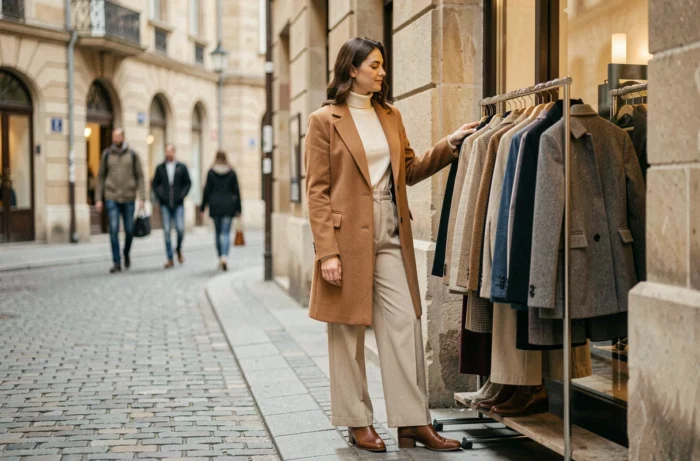
The long coat (knee-length, straight or slightly flared cut) remains the most structuring piece of an autumn-winter look. Choose it in a neutral color (black, heather gray, camel) to increase possible combinations.
A well-cut coat transforms a basic outfit into a polished look. It’s the piece to focus your budget on if you can only make one seasonal purchase.
Building a Personal Style from Fashion Trends
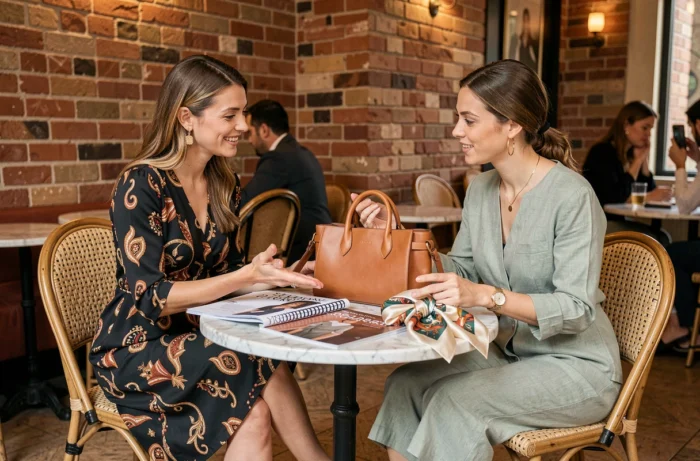
Following trends doesn’t mean adopting everything. The most effective approach is to select two or three elements of the season and integrate them into pieces you already own.
Specifically, you can think in categories:
- A silhouette piece (the barrel jean or wide-leg pants) that redefines the base of the look
- A color element (a sweater in one of the strong shades of the season) that updates your wardrobe without replacing everything
- A structuring accessory (wide belt, textured leather handbag, thick scarf) that adds a seasonal touch to a coat you’ve been wearing for three years
- A material (corduroy, thick knit, boiled wool) that anchors the look in the autumn period
This method limits unnecessary purchases and aligns with the underlying trend towards a more sustainable fashion and streamlined collections. You build a style instead of accumulating pieces.
Women or Men: Adapting Trends to Your Wardrobe
The majority of trends this season (warm colors, structured cuts, textured materials) are unisex. The barrel jean comes in both women’s and men’s cuts. The long coat has transcended gender categories for several seasons.
The difference lies in proportions. Adjusting the cut to your body type is more relevant than following a seasonal dictate. A wide pant worn too loosely loses its structuring effect, whether you are a woman or a man.
This year’s fashion trends converge towards a more thoughtful wardrobe, where each piece has a function in the silhouette. With the arrival of the digital textile passport and the tightening of European standards, this logic will accelerate. Three well-chosen pieces are better than a wardrobe overloaded with clothes you no longer wear after two months.