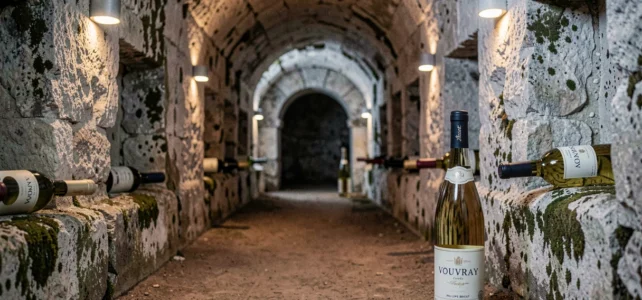
The Loire wines signed Brédif hold a unique place in the landscape of French whites. Vouvray, Chinon, chenin blanc vinified as dry, sweet, or sparkling: the range covers a wide spectrum, but it is especially the recent dynamics of the export market and adaptation to climate change that are reshaping the profile of this centuries-old house. What do current data reveal about the position of these cuvées compared to other Loire whites?
Loire Whites in Export: The Figures that Distinguish Vouvray
In the first half of 2026, AOP Loire white wines show a rise of about 6% in export volumes, while European AOP wine exports are generally declining. This counter-current deserves to be detailed, as it directly concerns cuvées based on chenin blanc, the exclusive grape variety of Vouvray.
| Indicator | AOP Loire Whites (H1 2026) | European AOP Wines (H1 2026) |
|---|---|---|
| Export volume change | +6% | Declining |
| Top market by value | Germany | Variable by region |
| Share of the United States (Loire export value) | about 18% | Not comparable |
| Recent price adjustment (US market) | Average decrease of 5.8% | Not reported |
The United States thus accounts for nearly one-fifth of the value of Loire wine exports, just behind Germany. Loire producers, including Maison Brédif, have recently agreed to an average price reduction to maintain their competitiveness across the Atlantic.
The production of Philippe Bredif fits into this trend of premiumization of chenin whites: classic Vouvray, Nectar Marc Brédif from late harvests, and the exclusive cuvée Vigne Blanche in dry. Three different profiles, one grape variety, and a positioning that benefits from the growing appetite of Anglo-Saxon markets for gastronomic whites.
Harvests in Vouvray: Three Weeks Ahead and What It Changes in the Glass
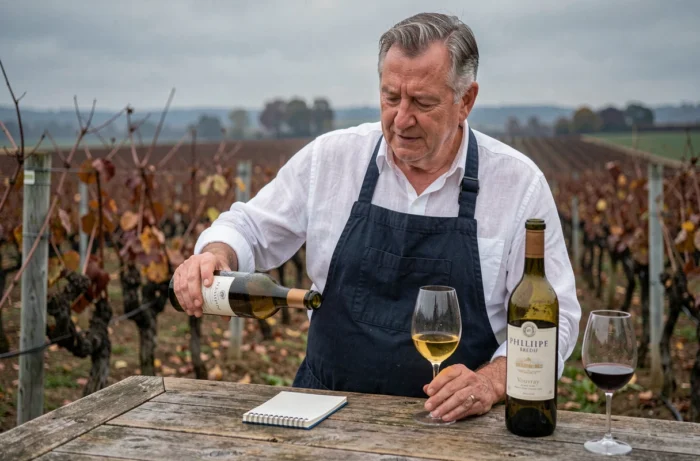
Since the summer of 2026, Vouvray winemakers have reported harvests advanced by about three weeks compared to the traditional calendar. France 3 Centre-Val de Loire describes the phenomenon as “unprecedented in the memory of winemakers.” Repeated heatwaves and drought are accelerating the maturation of chenin blanc, with direct consequences on the style of the wines.
Chenin harvested earlier concentrates its sugars and acidity differently. For a house like Brédif, which vinifies both dry (Vigne Blanche), sweet (Nectar), and sparkling wines, calibrating the harvest date becomes a major technical decision.
The Parameters at Play for the Winemaker
- Leaf management: maintaining enough shade to slow maturation without promoting fungal diseases, a delicate balance when temperatures exceed seasonal norms
- Adjusting row width: wider spacing promotes aeration but reduces planting density and thus potential yield
- Choosing the harvest date plot by plot: on clay-limestone, siliceous, or sandy soils, maturity does not progress at the same pace, necessitating successive passes
This adaptation rarely appears in the usual content about Maison Brédif, which focuses on history and wine tourism. However, it conditions the aromatic profile of the vintage that the consumer will find in the bottle.
Terroirs and Brédif Cuvées: A Chenin Blanc Varied by Geology
The Vouvray vineyard rests on tuffeau soils covered with flint clays, limestones, and sands. Maison Brédif exploits this diversity to produce three distinct types of Vouvray from the same grape variety.
The classic Vouvray comes from multi-parcel blends. The Nectar Marc Brédif, harvested in late harvests during sufficiently concentrated vintages, relies on the over-ripening of chenin. The Vigne Blanche, the house’s exclusive monopoly, produces a dry white from a unique lieu-dit.
However, production is not limited to Vouvray. The house also vinifies reds and rosés from cabernet franc in Chinon, including the Chinon Réserve Privée, as well as a rare Chinon Blanc. The latter remains marginal in volume but illustrates the versatility of the estate within the Loire vineyard.
Troglodyte Cellars: A Measurable Conservation Asset
Dug into the tuffeau since the 10th century, the cellars of Maison Brédif are among the largest in the appellation. They preserve vintages dating back to 1874, making it a living library of Loire chenin blanc.
The natural temperature and humidity of the tuffeau ensure a stability that few modern wineries replicate without air conditioning. For sweet and sparkling wines, this thermal regularity contributes to slow aging, favorable to aromatic complexity.
Price Positioning and Premiumization of Chenin Whites
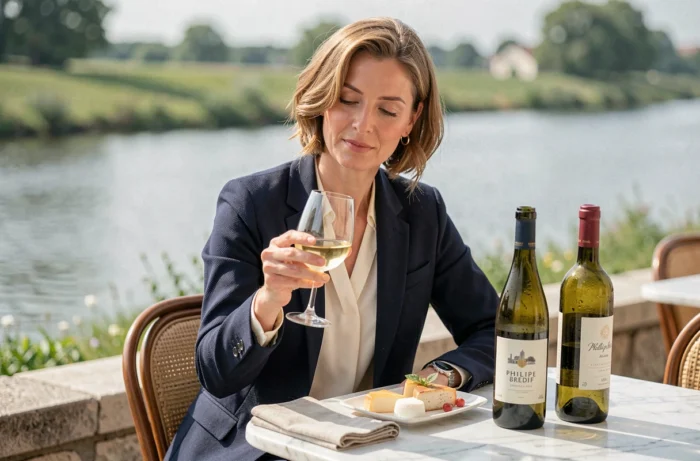
The average price decrease of 5.8% in the American market reported by Shanken News Daily reflects a strategic adjustment rather than fragility. Loire producers seek to preserve their volumes in the face of competition from New Zealand and South African whites while maintaining a premium positioning.
For Maison Brédif, taken over in 1980 by Baron Patrick de Ladoucette, this upgrade relies on three levers:
- The rarity of parcel cuvées (Vigne Blanche in monopoly, Nectar in limited production during great vintages)
- The stock of old vintages in the cellar, which feeds a market of collectors and sommeliers seeking evolved chenin blanc
- The association with the name Ladoucette, a recognized reference in Pouilly-Fumé, which lends credibility to the high-end positioning in export markets
The segment of Loire whites remains one of the few growing in export in Europe. The Brédif cuvées, supported by a heritage of troglodyte cellars and documented expertise over more than a century, have concrete arguments to capture this demand. The 2026 vintage, marked by early harvests and monitored yields, will be a real test of the house’s adaptability to climate change.